
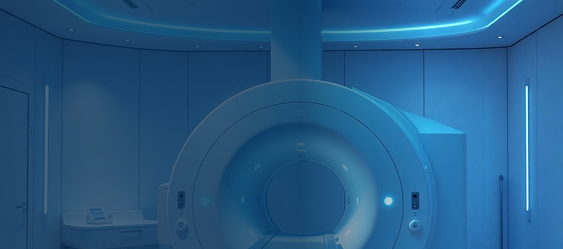
DIAGNOSTIC MRI
Connect off-site technologists directly with patients.
Diagnostic MRI represents the largest segment of the MRI imaging ecosystem. With more than 100 million scans performed annually, even small improvements in workflow efficiency or patient experience could have significant impact. As imaging centers look for ways to improve patient satisfaction and reduce scan interruptions, reliable communication inside the MRI bore becomes increasingly valuable.
During a diagnostic MRI, patients are often isolated inside the scanner with minimal ability to communicate with technologists. Instructions may be difficult to hear, and patients may struggle to respond clearly if they become uncomfortable or anxious.
Improving communication inside the scanner could significantly improve the patient experience, reduce scan times and minimize repeat imaging due to movement.
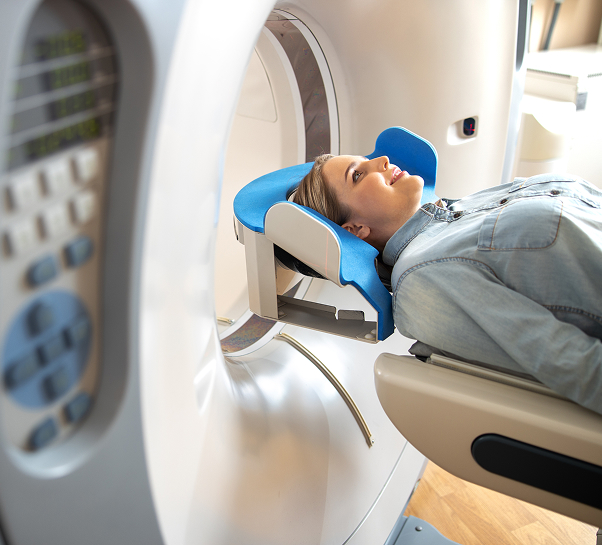
DIAGNOSTIC MRI
EERS aims to minimize
Patient anxiety
Isolation and scanner noise heighten stress, especially for first-time and pediatric patients.
Repeat scans
Movement from unclear instructions leads to retakes and longer appointments.
Longer scan times
Limited back-and-forth slows down the workflow for technologists and patients alike.
Sedation reliance
Pediatric and claustrophobic patients often require sedation that better communication may reduce.
EERS is working with clinical partners and research institutions to explore how improved communication inside MRI environments can support new clinical workflows and improve patient outcomes, with active research into sedation reduction and enhanced patient interaction during imaging.
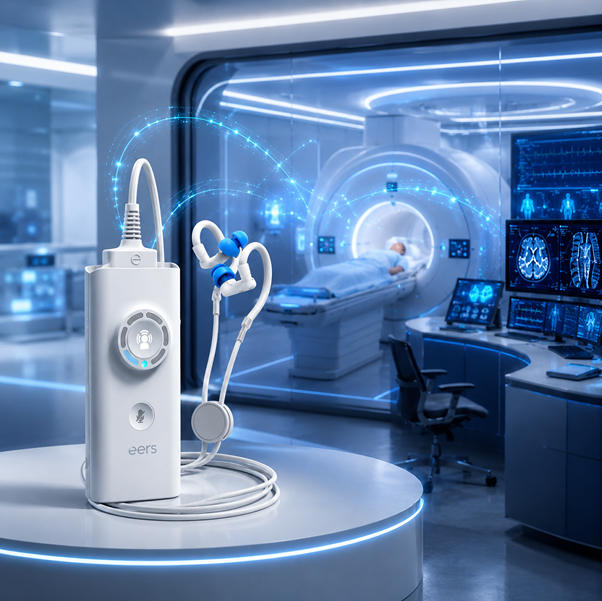
OUR MISSION
Clear communication, even in the loudest room in medicine.
MRI technology has transformed medical imaging and enabled new forms of diagnosis and treatment. Yet one fundamental challenge has remained largely unchanged — voice communication in and around the scanner.
EERS exists to solve this problem.
Our mission is to enable clear, reliable communication in the most acoustically challenging environment in medicine, helping clinicians perform procedures with greater confidence while improving the patient experience during imaging.
By combining advanced audio engineering, machine learning, signal processing, and MRI-safe hardware, EERS is building the communication layer for the next generation of MRI workflows.
Learn More About EERS Technology
Discover how EERS is turning one of medicine’s most isolating experiences into one of its most connected — for patients, clinicians, and the future of MRI.